
Residential pest control
Inspection, targeted treatment and sealing for houses, duplexes and apartments, one time or on a recurring plan.
Learn more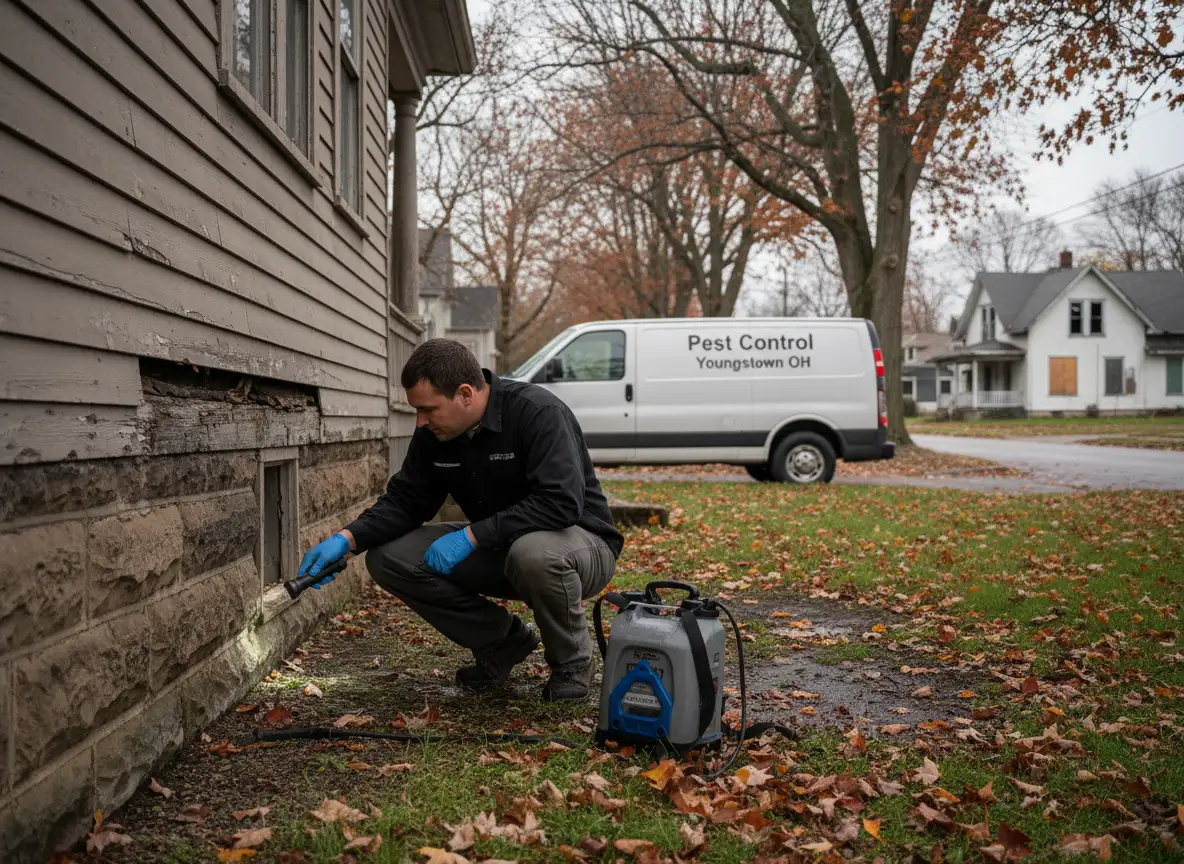
Pest control in Youngstown, OH for mice in the basement, ants in the kitchen, wasps under the eaves or termites in a sill plate. We inspect first, find out what you have and how it gets in, then treat and seal so it stays out.
Pest Control Youngstown OH is a locally owned pest control company that serves Youngstown, OH and nearby Mahoning County communities like Boardman, Austintown, Poland and Struthers. Treatments are applied by Ohio-licensed pesticide applicators following the product label. Every job starts with an inspection, because the right fix depends on the pest, the building and how the pest gets inside.
Youngstown pest problems follow the seasons. Mice push into basements when the weather turns cold, termite swarmers show up in spring, and yellowjacket nests get big and testy by late summer. Older homes with block or stone foundations give pests more ways in, so sealing gaps is often as important as any spray.
We are open 24 hours, 7 days a week. Call (888) 752-0103 and tell us what you are seeing.

Youngstown averages 67.8 inches of snow a year, and January and February average below freezing. Summers are warm, with a July average of 71.5°F. That swing drives the calendar below.
How to read it: termites in Ohio swarm in spring and early summer, according to Ohio State University Extension. Yellowjacket colonies reach about 4,000 to 5,000 workers by August and September, which is why late summer stings are so common. Ohio's mosquito season starts in April, per the Ohio Department of Health. Blacklegged ticks can be active in any month when temperatures allow, so fall and winter hikes still call for tick checks.
Pick the pest or the problem. Each page explains signs, how the treatment works and how to get ready.
Inspection, targeted treatment and sealing for houses, duplexes and apartments, one time or on a recurring plan.
Learn moreMonitoring and service records for restaurants, offices, warehouses, schools and churches.
Learn moreYard treatments plus help finding standing water and tick habitat along wooded edges.
Learn moreSoil treatments and bait systems for eastern subterranean termites, the main termite in Ohio.
Learn moreA careful look for mud tubes, damage and moisture, including wood-destroying insect (WDI) inspections for home sales.
Learn moreTrapping, tamper-resistant bait stations where needed, and closing the gaps mice and rats use.
Learn moreGel baits and crack and crevice work for German cockroaches in kitchens and baths.
Learn moreCarpenter ants, pavement ants and odorous house ants, treated at the colony, not just the trail.
Learn moreWeb removal and treatment of basements, garages and window frames, plus fixing what draws spiders in.
Learn moreConfirmed identification, a clear prep list and follow-up visits for homes and rentals.
Learn moreYellowjackets, hornets and paper wasps. Honey bee swarms are referred to a beekeeper when possible.
Learn moreSealing foundation gaps, utility openings, vents and door sweeps so pests cannot walk back in.
Learn moreWho we help: homeowners, renters, landlords and property managers, people buying or selling a home who need a termite (WDI) inspection, and businesses like restaurants, offices, warehouses, schools and churches. Not sure which service fits? Call (888) 752-0103 and describe what you see. We will point you to the right one.
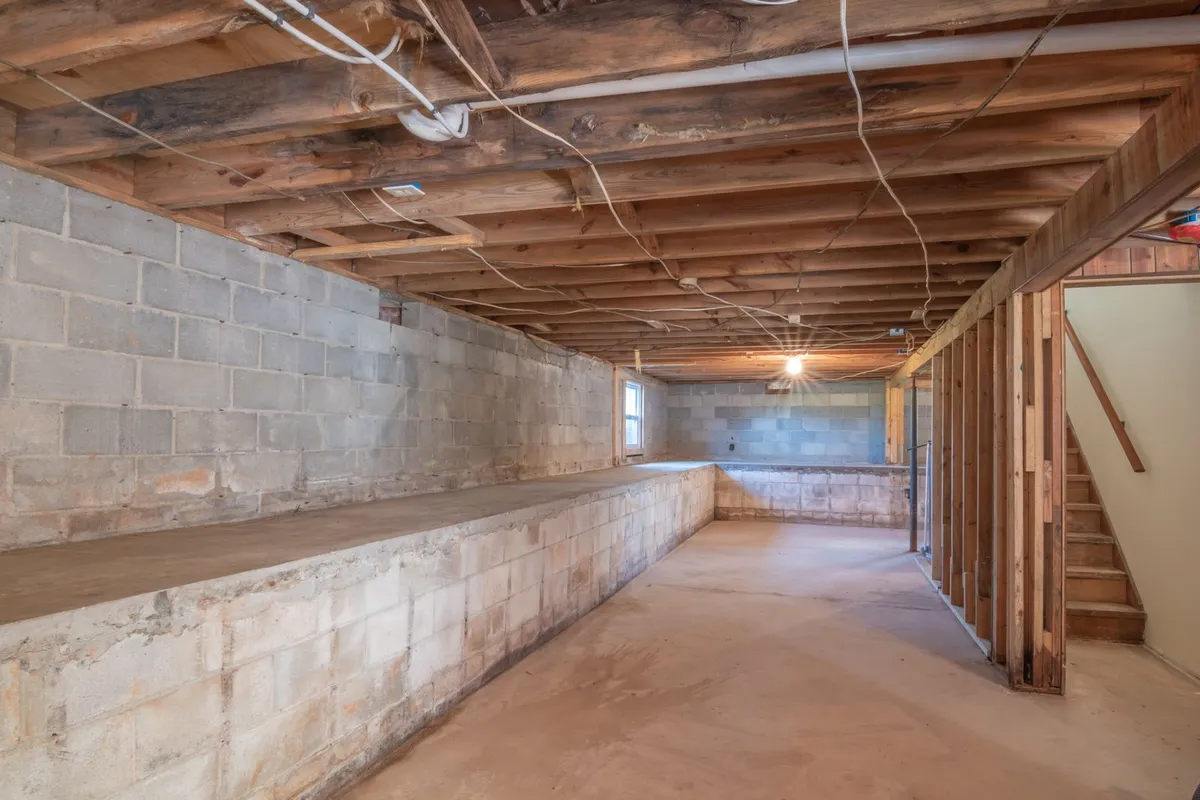
A 2020 housing study for the City of Youngstown found that most of the city's housing was built before World War II. Homes that age often sit on stone or block foundations, with old pipe and wire holes, settled sill plates and basement windows that no longer seal tight.
Those gaps matter. The CDC says a mouse can fit through a hole about 1/4 inch wide, the width of a pencil. That is why a mouse problem in an older house usually comes back after trapping alone. The fix is to find and close the openings with materials rodents cannot chew, like steel wool with caulk, hardware cloth, metal or cement.
Neighboring buildings play a part too. The same study counted 1,841 vacant residential structures in the city in 2019, down nearly 50 percent from 2016. An empty house next door can shelter mice and wasps that later move to occupied homes, so sealing your side of the property line matters.
Damp basements add a second problem. Moisture softens wood, which draws carpenter ants and makes it easier for termites to feed. A dehumidifier and good gutters can do as much as a treatment.
This is Integrated Pest Management (IPM). Ohio State University Extension suggests asking any pest company whether it offers IPM. The idea is simple: fix the cause and use only the product the problem needs.
We walk the inside and outside, from basement to attic, looking for droppings, damage, entry points and moisture.
We confirm the species. A pavement ant and a carpenter ant need very different treatments.
Baits, traps or targeted products go only where the pest lives and travels, applied by a licensed applicator following the label.
We seal entry points and point out fixes like leaks, clutter or food storage that keep pests coming back.
Follow-up checks and monitors show whether activity has stopped or if anything needs adjusting.
One ant is not an emergency. These signs usually mean an active problem that will not fix itself.
Small dark droppings near food, plus chewed packaging or shredded paper nests, are classic signs of mice listed by the EPA.
Pencil-wide dirt tubes on a basement wall or pier are how subterranean termites travel between soil and wood.
Wings on a windowsill in spring often mean termites swarmed indoors. Save a few in a bag for identification.
A steady line of yellowjackets entering a gap in siding or the ground means a nest. Do not plug the hole, they may chew inside.
Spots on mattress seams and bites on waking can point to bed bugs. A confirmed ID comes first.
Seeing cockroaches during the day often means a large population hiding nearby.
Most pest problems are solved from the bottom up. Inspection and correct identification come first. Then come the fixes that remove what pests need: a way in, food, water and shelter. Products are added only where they are needed.
This matters for families with kids and pets. Less product in living areas means less to keep people away from. When a treatment is needed, keep kids and pets away from treated areas for as long as the technician directs.
We cover every side of the city and the nearby townships, village and city that border it.
It depends on the pest, how big the problem is, the size of the building and how many visits it takes. A one-time ant treatment is very different from termite work or a bed bug job with follow-ups. We give you a clear quote after the inspection, before any work starts.
Yes. Treatments are applied by Ohio-licensed pesticide applicators following the product label. The Ohio Department of Agriculture licenses commercial applicators, and anyone can look up a license with its online Pesticide Applicator Search.
Every product is used the way its EPA label says, and federal law requires that. We favor baits, traps and sealing where they work. Keep kids and pets away from treated areas for as long as the technician directs.
As nights get cold, mice look for warm shelter and food, and a basement is an easy target. A mouse can fit through a gap about 1/4 inch wide. Sealing those gaps before October is the best way to stop the yearly cycle.
Ohio State University Extension says eastern subterranean termites swarm in spring and early summer. Swarmers often fly toward windows and lights indoors. Seeing a swarm inside usually means a colony is feeding nearby, so it is worth an inspection.
Yes, for city residents. The Youngstown Environmental Health Division runs a rat control program with free educational resources and free rat baiting in residential areas with confirmed rat activity. For rats inside your home or business, or for sealing entry points, call a pest control company.
For a single problem like a wasp nest, one visit may be enough. For pests that keep coming back, such as mice in an older house or ants every spring, a recurring plan with seasonal visits often works better. We recommend what fits after the inspection, not before.
Yes. Besides every part of the city, we serve Boardman, Austintown, Poland and Struthers. Call us if you are close by and not sure we cover your street.
Tell us what you are seeing and where. Photos help. Pest Control Youngstown OH, 20 W Federal St, Suite 302, Youngstown, OH 44503.
Pest Control Youngstown OH is a locally owned pest control company. Treatments are applied by Ohio-licensed applicators following the product label.